A strong savings rate can help idle cash earn more, but the best fit also depends on how much you can deposit and when you may need the money. For people balancing bills, goals, and an emergency fund, choosing where to keep cash can affect both its growth and availability.
We compare High-Yield Savings Accounts with Best Rates using a dated rate snapshot. A competitive yield matters, but so do balance rules, fees, access, and deposit protection. The annual percentage yield (APY) is the annualized measure of a deposit account’s interest rate and compounding frequency.
Our comparisons can help you narrow your choices without treating a high advertised rate as a promise. Account terms and rates can change, so check the details that apply to your own deposit. Compare the account’s current APY and eligibility rules before moving your cash.
Key Takeaways
- Peak Bank listed the highest APY in our dated comparison.
- Compare opening deposits with minimum balances to earn APY.
- Check transfer methods, fees, and any withdrawal limits.
- Variable savings rates can rise or fall over time.
- Keep deposits within the relevant insurance coverage limit.
- Choose an account that fits your goal and access needs.
High-Yield Savings Accounts With Best Rates
Peak Bank’s 4.27% APY leads this group, while CIT Bank and Barclays each list 4.25%. These are dated snapshots, not guaranteed future rates, and account rules can affect what you earn.
Peak Bank has the highest listed APY here, but it requires a $100 opening deposit. The table shows the APY date, the balance needed to earn it, and the amount required to open each account.
Peak Bank’s 4.27% APY leads this dated comparison, but its $100 opening deposit still matters.
| Account | APY and date | Minimum balance to earn APY | Minimum opening deposit |
|---|---|---|---|
| Peak Bank Envision High Yield Savings Account | 4.27%, October 20, 2026 | $0 | $100 |
| CIT Bank Platinum Savings | 4.25%, October 23, 2026 | $5,000 | Not stated |
| Barclays Select Savings | 4.25%, October 23, 2026 | $0 | Not stated |
| LevelUp Savings | 4.20%, October 23, 2026 | $0 | Not stated |
| EverBank Performance Savings | 4.20%, October 20, 2026 | $0 | $0 |
The best high-yield savings choice is not always the account with the largest number. CIT Bank’s listed APY requires a $5,000 minimum balance, while Barclays lists no minimum balance to earn its APY. Opening requirements can differ from earning requirements.
Our snapshot compares high-yield savings accounts and high-yield savings account offers available on their stated dates. A bank may change its savings account rates, and the APY can differ by balance or eligibility. Check that you can meet the account’s earning and opening requirements before choosing by APY alone.
How Do Savings Rates Compare by Institution Type?
In this snapshot, individual listed offers range from 3.20% to 4.27% APY, above the institution-type averages shown for October 16, 2026. Curinos averages were 0.45% for banks, 1.33% for credit unions, and 2.81% for online banks.
The national average savings APY displayed separately was 1.65%. That figure is not the same measure as each institution-type average or a specific account offer.
Institution type can help explain the typical interest rate for a high-yield savings account, but it cannot predict every bank’s offer. A product’s rate depends on its institution and account rules. Online banks may list higher yields than traditional banks or credit unions.
For a useful comparison, look at the product’s current annual percentage yield and its balance requirements. The listed account rates in this roundup range from 3.20% to 4.27% APY on their stated dates. Those individual offers sit above the averages, but each has its own terms.
The phrase high-yield savings account interest rate can refer to an average or one account’s advertised yield. Those numbers answer different questions. An average describes a broader group, while a live offer describes the rate attached to a particular product.
Credit unions are member-owned financial institutions, while banks operate under different ownership structures. Both can offer savings products, but a credit union’s account is not automatically a bank deposit. Compare a live offer with its own eligibility rules, since an average cannot tell you what your account will earn.
Which Accounts Have Low or No Opening Requirements?
A $0 balance threshold for earning interest is different from a $0 opening deposit, so check both before applying. Some accounts let a small balance earn APY but still require money to open.
For someone starting with little cash, the opening minimum may matter more at first. A minimum balance to earn APY matters after the account is funded.
Accounts with no minimum opening deposit
Live Oak Bank’s online savings account, TAB Bank’s high-yield savings account, and Bask Bank’s Interest Savings Account listed no minimum opening deposit and no minimum balance to earn APY. Their dated APYs were 4.00%, 3.95%, and 3.90%, respectively.
Marcus by Goldman Sachs listed a 3.50% APY as of October 23, 2026, with no minimum balance to earn APY. That condition alone does not establish its opening deposit. Langley Federal Credit Union High-Yield Savings listed 3.75% APY and no minimum balance to earn APY on that date.
Accordia Bank listed 4.10% APY and a $100 opening deposit as of October 20, 2026. Its best yields are limited to Utah residents. American Express High Yield Savings listed 3.20% APY as of October 23, 2026, with no minimum to open.
Accounts with a small opening deposit
Vio Bank and Popular Direct each listed a $100 opening deposit and no minimum balance to earn APY. Bread Savings also required $100 to open, but its listed earning threshold was $1. Western State Bank required $1,000 to open, despite having no minimum balance to earn APY.
| Account | APY and date | Minimum opening deposit | Minimum balance to earn APY |
|---|---|---|---|
| Vio Bank Online Savings | 4.01%, October 20, 2026 | $100 | $0 |
| Western State Bank online savings | 4.20%, October 20, 2026 | $1,000 | $0 |
| Bread Savings | 4.05%, October 20, 2026 | $100 | $1 |
| Live Oak Bank online savings | 4.00%, October 20, 2026 | $0 | $0 |
| TAB Bank high-yield savings | 3.95%, October 20, 2026 | $0 | $0 |
Langley Federal Credit Union is a credit union product, not a bank deposit account. Its rules and coverage differ from those for bank deposits. For a first deposit below $100, prioritize an account whose stated opening minimum is zero.
What Does APY Tell You About Your Savings?
APY is an annualized measure of interest and compounding, not a promise that a variable rate will stay unchanged for a year. It lets us compare deposits using both the interest rate and how often interest compounds.
The stated APY assumes the principal and interest stay on deposit for the full term, with no other deposits or withdrawals. That assumption matters because real account activity can change the interest earned.
How the annualized yield is calculated
APY annualizes the interest rate and compounding frequency. For accounts without a stated maturity date, the calculation assumes a 365-day term. This makes it easier to compare savings account rates that compound on different schedules.
Many high-yield savings accounts compound interest daily and credit it monthly, though each account sets its own schedule. The annual percentage yield also excludes the value of a bonus or other consideration worth $10 or less, if offered to open, maintain, increase, or renew an account.
How compounding and account activity affect the result
Consider $10,000 at 5% APY. It would earn an estimated $500 in first-year interest if that APY stayed constant. At 0.50% APY, the same balance would earn about $50, a $450 difference.
That example is an illustration, not a forecast. A real savings account’s rate can change, and withdrawals or added deposits change the balance used to earn interest.
- The interest rate sets the base return used in the APY.
- Compounding frequency affects how interest earns interest.
- Keeping funds on deposit supports the full-term assumption.
- Account activity and qualifying bonuses can affect the result.
APY is a useful comparison, but it does not guarantee a set amount of interest for every saver. Use the APY as a comparison tool, then check the account’s rate and compounding terms.
Can a High-Yield Savings Rate Change?
A high-yield savings APY can change after you open the account because it is usually variable. The interest you earn depends on the rate over the time your money stays deposited.
A variable rate may rise or fall without a new account opening. That makes a current offer a snapshot, rather than a fixed return for the year.
High-yield savings accounts generally have variable rates, while CDs typically have fixed rates for a set term. A bank or credit union sets its own account rates, based on its funding needs and market conditions.
The Federal Reserve’s policy rate can influence deposit rates, but it does not set the APY for each savings account. Broader market conditions also matter. Institutions may adjust rates as their need for deposits changes.
When rates shift, the APY on an existing account can change too. Interest earned over several months reflects the rates in effect during those months, not only the rate shown when the account opened.
Many accounts compound interest daily and add it to the balance monthly, though schedules vary. That schedule does not make the rate fixed. Recheck your rate periodically, especially if a newer offer would materially improve your expected earnings.
How Do Minimum Balances and Rate Requirements Work?
Wells Fargo Platinum Savings shows how a listed APY can depend on a high balance threshold. As of October 7, 2026, it listed 3.25% APY for balances of $25,000 or more, subject to new-customer eligibility.
Qualifying customers must deposit and maintain at least $25,000 within 30 days of opening. After that, they must keep a minimum daily balance of at least $25,000. The rate is variable and may change at any time.
An opening deposit is the amount needed to start an account. A minimum balance to earn a stated APY is the amount needed to receive that rate. An ongoing daily balance is the amount you must keep in the account each day.
A high opening deposit does not always guarantee the advertised rate. An account can also require a balance to qualify for a rate tier or a separate daily minimum to keep it. Falling below a threshold may affect the APY or eligibility.
Before opening, check these three points:
- The amount required for the opening deposit.
- The balance required for the advertised APY.
- How long you must maintain that balance.
These distinctions help us judge whether a rate fits a real savings balance. Someone with $25,000 available on opening day still needs to keep the required amount afterward. Confirm that your normal balance can meet the requirement every day, not just on opening day.
What Fees and Withdrawal Access Should You Check?
A high APY is less useful if the account’s withdrawal route does not fit the way you need to use your cash. Check how money gets in and out before opening the account.
Some online savings accounts depend on linked bank transfers, while others offer added ways to deposit checks. The access route can matter when you need cash quickly.
How you can deposit and withdraw
| Account | Deposit method | Withdrawal method | Access caveat |
|---|---|---|---|
| Peak Bank Envision | Bank-to-bank transfer | Bank-to-bank transfer | No cash deposits |
| Popular Direct | Mobile check deposit | Electronic transfer | No ATM card |
| Bread Savings | Electronic transfer | Electronic transfer | $5 paper-statement fee |
| American Express High Yield Savings | Linked external account | Electronic transfer | No ATM card, debit card, or checks |
| Capital One 360 Performance Savings | Electronic transfer | Online or at a branch | No ATM withdrawals; transfer to checking |
Capital One customers can transfer funds to checking for ATM access. American Express linked-account setup can take up to two days, while eligible express transfers can arrive the same day. Those timing differences may matter if a bill is due soon.
Which fees or limits could affect convenience
Monthly maintenance fees, paper-statement fees, transfer timing, and account-specific withdrawal limits can all affect convenience. No monthly fee does not mean every service is free.
Check whether the account charges for paper statements or other services you plan to use. Also consider whether a transfer must pass through checking before you can spend or withdraw the money.
Access can be part of the account’s real value, not an afterthought. Before opening, test the full route from your linked account to the place where you will spend or withdraw funds.
How Much of Your Savings Is FDIC-Insured?
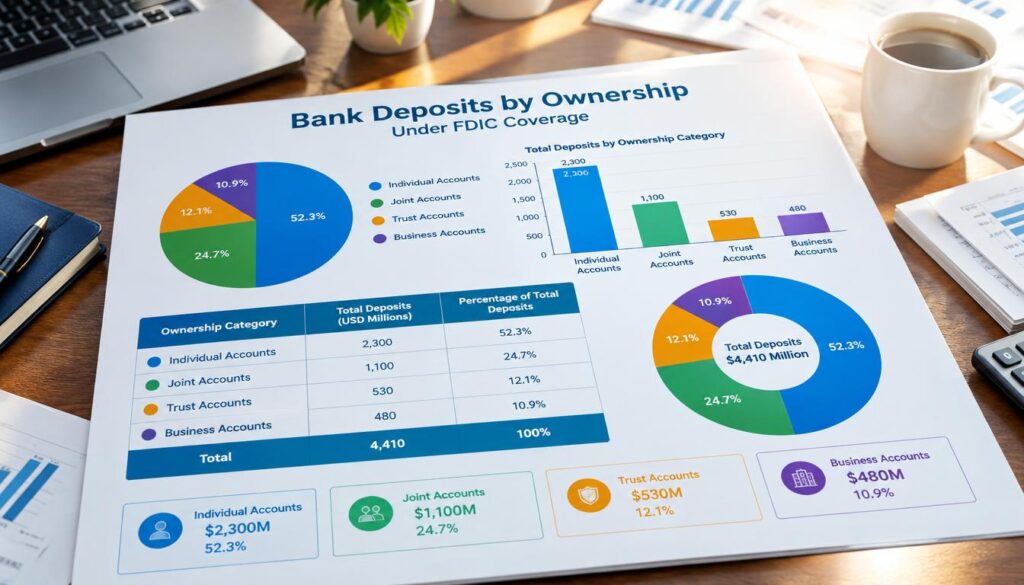
The standard FDIC limit is $250,000 per depositor, per ownership category, at each insured bank. Deposits that share the same category at one bank count together toward that limit.
FDIC insurance covers deposits at insured banks, not investment products. It protects eligible deposits if an insured bank fails.
The standard coverage limit
A depositor can receive coverage up to $250,000 for deposits in one ownership category at one FDIC-insured bank. The limit applies to the combined deposits in that category, not automatically to each account separately.
For example, two savings accounts held in the same ownership category at the same bank do not each receive a separate $250,000 limit. Their balances are combined to determine coverage.
How ownership categories affect coverage
Different ownership categories may qualify for separate coverage at the same insured bank. The account’s ownership structure matters, so simply opening another account does not always increase the amount protected.
Deposit accounts and investments also receive different treatment. FDIC insurance applies to deposits at insured banks, not non-deposit investment products. A brokerage investment account should not be treated as an insured bank deposit.
Keep records of the balances you hold at each bank and how each account is owned. Add all deposits you hold in the same ownership category at that bank before deciding whether you are within the limit.
Which Savings Goal Fits a High-Yield Account?
A high-yield savings account is most useful when the money needs to stay accessible while earning interest. It has no fixed term, though an institution may set dollar or withdrawal limits.
Choose the account based on when you may need the money. Timing matters more when a goal has a firm due date.
Cash you may need soon
An emergency fund covers surprise costs such as a repair, medical bill, or lost income. A common rule of thumb is to hold about 3-6 months of essential expenses. Your income stability and household obligations can change what feels workable.
That range is a flexible guide, not a required target for every household. Other near-term needs may include insurance costs or a planned move. An accessible account can keep that money separate from daily spending.
Savings for a planned expense
A high-yield savings account can suit a down payment, wedding, moving costs, or vacation when you want cash available for a known goal. Whether $20,000 is a lot to keep in savings depends on essential expenses, debt, access needs, and other goals.
For a short-term goal, accessible insured cash can be a sensible place to keep $20,000. A fixed-term product may not suit money you could need before a planned payment.
- Emergency fund
- Down payment
- Wedding
- Moving costs
- Vacation
Cash held for a goal should be ready before its due date. Keep enough cash available for the goal’s timing, rather than choosing an account on yield alone.
Is a High-Yield Savings Account Better Than a CD?
A savings account is usually the better fit for accessible cash, while a CD can suit money you can leave untouched for its term. A CD is a certificate of deposit, a deposit held for a fixed period.
High-yield savings accounts generally have variable APYs and no fixed term. CDs typically have fixed rates for a set term. The right choice depends on when you need access to the deposit.
When a savings account is the better fit
A savings account suits money you may need before a fixed date. You can usually access the funds without waiting for a maturity date, though account terms can set limits or fees.
The Curinos average APY for money market accounts was 1.03% as of October 16, 2026. That figure is a group average, not a quote for an individual savings account or CD.
When a CD may suit a longer timeline
A CD may suit money that can remain deposited until maturity. Taking money out early can trigger a bank penalty. A brokered CD may need to be sold for less than face value and may include a trading fee or markdown.
The Curinos one-year CD average APY was 2.61% as of October 16, 2026. It gives context, but a specific CD may have different terms and a different rate.
| Account type | Rate behavior | Access | Early-withdrawal consequence |
|---|---|---|---|
| High-yield savings account | Usually variable | Withdraw or transfer under account terms | No CD-style maturity penalty |
| CD | Typically fixed for a term | Funds held until maturity | Bank penalty may apply |
| Investment account | Return can vary | Sell or withdraw under account terms | Value may be below the amount invested |
For a planned bill due soon, access may matter more than locking in a rate. For money you can leave alone, a fixed-term deposit may fit. Match the term to the date you expect to need the money.
Can You Withdraw Money Without a Penalty?
A high-yield savings account has no CD maturity date, but its bank may still set withdrawal limits or fees. It does not have a CD-style early-withdrawal penalty.
Financial institutions are no longer required to limit convenient savings withdrawals or transfers to six per month, following a 2020 rule change. They may still set their own limits or fees, so account agreements matter.
A CD has a maturity date, and withdrawing early can cost interest. Wells Fargo’s penalty depends on the CD term, and larger penalties can cut principal if the charge exceeds interest earned.
Wells Fargo’s early CD withdrawal penalty is one month’s interest for terms under 90 days. For terms from 90 through 365 days, the penalty is three months’ interest.
For terms over 12 months through 24 months, the penalty is six months’ interest. For terms over 24 months, it is 12 months’ interest.
A savings withdrawal and a CD withdrawal are not the same event. Savings access depends on the account’s transfer rules and fees, while a CD penalty applies when money leaves before maturity.
Check any transaction limits before relying on savings for frequent payments. Read the specific account agreement before moving money more often than usual.
What to Know About Capital One 360 Performance Savings
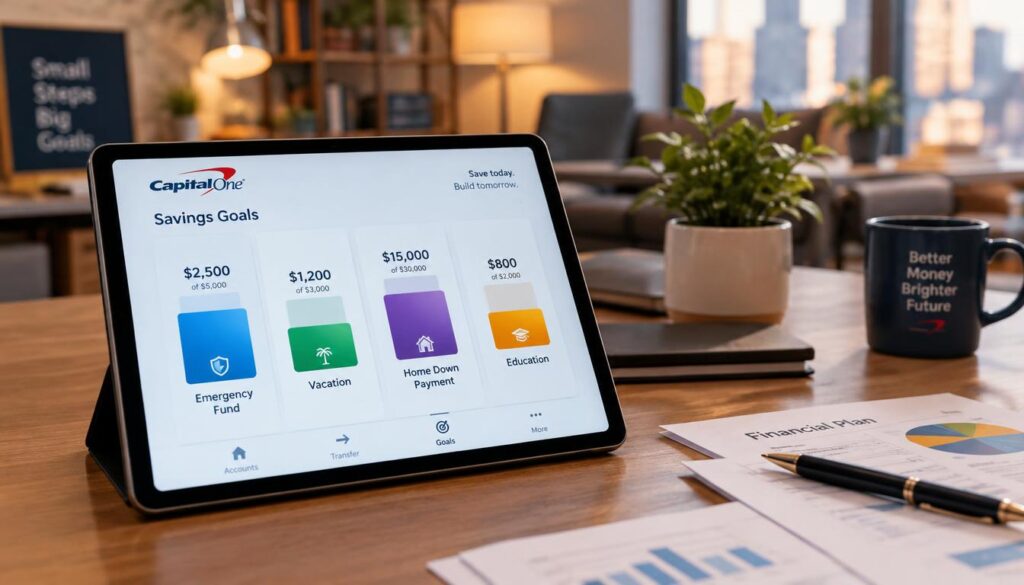
Capital One 360 Performance Savings lists a 3.20% APY and has no minimum balance requirement or monthly fee. The rate applies to the entire balance rather than in tiers.
As of October 22, 2026, the account had no minimum balance requirement and no monthly fees. Interest accrues daily and compounds monthly. One rate across the balance can make the return easier to estimate.
Customers can open multiple accounts for different savings goals. Separate accounts can help keep a vacation fund apart from cash set aside for a home repair, without tracking each goal in one balance.
Withdrawals are available online or at a branch, but not at an ATM. Customers can transfer funds to a checking account for ATM access. That extra step matters if cash access is part of your plan.
Capital One and Discover Bank deposit accounts opened on or after May 18, 2025, count together when determining FDIC coverage. This rule applies to those eligible accounts, so balances at both banks should be considered together.
The listed 3.20% APY is dated October 23, 2026, and savings rates can change. Check your combined Capital One and eligible Discover balances against the applicable insurance limit.
How Does Varo Bank High-Yield Savings Work?
Varo’s 3.75% APY applies to the first $5,000 only, and qualifying for it requires activity across both Varo accounts. Balances above $5,000 earn 1.00% APY.
To qualify for the higher tier, customers must open a Varo Bank Account and a Savings Account. They must also receive at least $800 in deposits and keep both accounts positive at month-end.
Those are three separate conditions, not optional extras. The account’s no-monthly-fee and no-minimum-balance claims do not remove the monthly requirements for its top APY.
The tiered rate means the APY on the first $5,000 differs from the rate above that amount. Someone with more than $5,000 should compare the combined return across the full balance with an account that applies one rate throughout.
Varo says its savings account has no monthly fees or minimum balance. It also says the account is FDIC-insured up to $250,000. Those features do not change the deposit and account activity needed for the higher rate.
A customer who does not meet the monthly conditions should not assume the top APY will apply. Compare the tiered return on your likely balance with a single-rate account before applying.
What Should You Check Before Opening an Account?
Before opening an account, verify the rate and requirements that apply to your own balance. Opening deposits among the accounts compared here range from $0 to $1,000.
Online applications commonly ask for identity and contact details. The exact application varies by institution, and some accounts also need an initial deposit from a linked account.
Use this checklist to compare the account with your goal:
- Select an account that fits the reason you are saving.
- Verify the current APY and any qualification conditions.
- Check opening and ongoing minimums, plus fees.
- Confirm deposit protection and available access methods.
- Prepare identity details and fund the account.
Applicants may need a name, date of birth, Social Security number or ITIN, address, phone number, and email. A financial institution may ask for a government-issued photo ID.
Some accounts require an initial deposit from a linked account. Check that the transfer method works for your current bank and that the opening amount is available when you apply.
Read the account terms before sending money. Save the account agreement and confirmation of the APY and opening terms you accepted.
Are Savings Account Earnings Taxable?
Interest earned in a savings account is generally taxable as ordinary income. A bank or credit union generally sends Form 1099-INT when interest reaches $10 in a tax year.
Interest may still be reportable even if no form arrives. A cash bonus for opening an account may also count as taxable income, so keep track of both interest and bonuses.
For your records, remember to:
- Include taxable interest in your annual income.
- Check for Form 1099-INT when interest reaches $10.
- Keep account statements to verify earnings if no form arrives.
Account statements can help you confirm the interest credited during the year. Keep them with tax forms, especially if you changed banks or closed an account.
Tax forms and statements also make it easier to spot missing details before filing. Keep your year-end tax forms and account statements together so you can report the interest accurately.
Conclusion
A competitive APY matters most when you can meet its requirements and still reach your money when needed. The best account matches your goal, balance, and need for access.
Compare the current disclosures for the two accounts that best fit your needs. Then confirm coverage before transferring money. Check the current account terms and deposit-insurance coverage before making your first transfer.