In October 2026, bad-credit personal loan APRs could reach 35.99%, depending on the borrower’s full financial profile. Yes, a borrower with bad credit may qualify for a debt consolidation loan, but the offer is useful only if it improves the cost or manageability of the existing debt.
APR is the annualized cost of borrowing, including interest and applicable fees, expressed as a percentage. One new payment can make monthly payments easier to track, but approval alone does not mean the borrower will save money.
The new loan helps financially only when its APR and total repayment cost improve on the debts it replaces. We can compare the full cost, payment fit and payoff time before deciding whether the offer works.
Key Takeaways
- A borrower with bad credit may qualify, but approval is not guaranteed.
- Compare APR, fees and total repayment, not only the monthly payment.
- A longer loan term can lower payments while raising total interest.
- Check lender criteria and the full credit profile before applying.
- Consider non-loan repayment plans when offers are too costly.
Compare the full repayment cost, not just the new monthly payment.
When can a consolidation loan help, and when can it cost more?
Consolidation is most useful when the new loan makes repayment simpler without increasing the total cost. Lower payments alone do not prove that a debt consolidation loan saves money.
Combining balances changes how we repay debt, but it does not erase or reduce the principal owed. We may combine credit card, retail card, medical and installment balances into one personal loan.
One payment can simplify repayment, but only a lower total cost creates savings. A smaller monthly bill may come from a longer loan, not a better deal.
A personal loan usually has a fixed rate, so the payment stays steady during its term. Personal loan terms commonly run from one to over 10 years, while two to five years is typical.
That steady schedule may help borrowers who struggle to track several due dates. Yet a longer term can keep interest building for more months, even when each payment is lower.
Before taking a loan, we can ask four direct questions:
- Will the new loan cost less overall than the debts it replaces?
- Can we afford the payment every month, including during a tight month?
- Can we stop adding new charges to cards after paying them off?
- Does the payoff timeline match our budget and plans?
Paying off a card with a loan can free up its credit limit. If we use that card again, we could end up with both the loan and a new balance.
Federal student loan consolidation follows a separate Department of Education program. A private consolidation loan is not automatically the right route for federal student debt.
Read the loan term alongside the payment amount, since the term shows how long interest may accrue. If the new payment is lower only because the repayment period is longer, check whether the extra months raise total interest.
Debt Consolidation Loans for Bad Credit: Compare Lender Options
Upstart and OneMain Financial publish no formal minimum score, while Avant and Upgrade list minimums of 580 and 600 in one October 2026 comparison. These published thresholds are starting points, not approval promises.
Online lenders may consider borrowers with a low credit score, but each lender reviews the full application. Published terms help us compare options before applying, not predict a final offer.
Online lenders with published bad-credit terms
In October 2026, Bankrate listed these personal loans for borrowers comparing a loan bad credit option. The listed ranges include each lender’s lowest and highest published APR and loan amount.
| Lender | APR | Loan amount | Published minimum score |
|---|---|---|---|
| Avant | 9.95%-35.99% | $2,000-$35,000 | 550 |
| Best Egg | 6.99%-35.99% | $2,000-$50,000 | 600 |
| Upstart | 6.30%-35.99% | $1,000-$75,000 | No minimum |
| Upgrade | 7.74%-35.99% | $1,000-$50,000 | 600 |
| Happen Bank | 5.96%-35.99% | $1,000-$75,000 | 600 |
The Avant minimum differs across October 2026 listings: Bankrate listed 550, while LendingTree listed 580. LendingTree also listed no formal minimum for Upstart and OneMain Financial.
All four lenders on LendingTree’s bad-credit page capped APRs at 35.99% and offered 24-84-month terms in October 2026. Happen Bank’s listed maximum was $75,000, though its product description said up to $60,000.
Upstart may consider education and employment along with credit. It does not offer joint or cosigner applications, while Best Egg can pay creditors directly.
A direct lender may suit borrowers who want to check one lender’s terms, but no online lender can promise the best debt consolidation loans for bad credit to every applicant. The full credit profile and income still matter.
Banks and large-loan options have different eligibility bars
U.S. Bank’s fixed APR was 9.24%-24.99% as of September 14, 2026. Clients could borrow $1,000-$50,000 for 12-84 months, while non-clients could borrow up to $25,000 for 12-60 months.
U.S. Bank charges no origination fee or prepayment penalty, but approval follows its program rules. BHG’s 2026 large-loan guide lists unsecured loans of $50,000-$250,000, a 600 FICO minimum and a preference for 740 or higher on larger loans.
Truist LightStream offers debt consolidation loans of $5,000-$100,000, but it requires a good-to-excellent credit profile. Citi offers personal loans to eligible new and existing customers, based on creditworthiness and other factors.
Readers asking about a U.S. Bank debt consolidation loan should compare its client and non-client terms, not assume they qualify. A lower advertised rate or high score alone does not secure approval.
Large-loan products and bank loans may suit some applicants, but their stated terms do not make them guaranteed bad-credit options. Treat every published minimum as an entry point for consideration, not a promise of approval.
What credit score and income do lenders consider?
A 520 FICO score is in the poor range, but it does not by itself determine whether a lender will approve an application. Income, debt obligations and credit history also shape a lender’s decision.
A score is one part of a credit profile, not a complete picture of whether we can repay a loan. Lenders may also review assets, payment history and the amount of debt we already carry.
A score is only one part of the application
Experian defines a poor FICO score as 300-579. NCUA-attributed tiers describe poor credit as below 580, fair as 580-669, and good or better as 670 or higher.
Those ranges help explain a score, but do not set one rule for every lender. A 520 score falls within the poor range; the same score can lead to different decisions across lenders.
Citi says lenders may use different scoring models, and income and debt obligations can affect an application. Personal loan lenders generally prefer a debt-to-income ratio of 36% or lower.
Truist’s LightStream criteria include credit score, credit history, assets, debt-to-income ratio and payment history. Truist also says a high FICO score does not guarantee approval.
For borrowers asking which banks offer debt consolidation loans for bad credit, Citi offers personal loans to eligible new and existing customers. Its eligibility depends on creditworthiness and other factors, so a bank loan is not designed for every low-score applicant.
Citi does not set a universal credit-score requirement across lenders. We should ask Citi which scoring model applies to an application rather than assume which FICO score it uses.
Ways to strengthen a thin or low credit profile
Small steps can make the credit profile clearer and improve the budget behind an application. They cannot guarantee approval, but they can help us avoid preventable problems.
First, review credit reports from the major credit bureaus. Look for accounts, balances or late payments that do not belong or show the wrong information.
Dispute mistakes with the credit bureau and the company that reported them. Keep copies of records and check for an updated report after the review.
Paying bills on time can build a record of steady repayment. Reducing revolving balances may also lower the share of available credit we use.
We can strengthen a thin credit profile by keeping a simple budget and avoiding new debt before applying. A lower monthly debt load can leave more income for a loan payment.
Borrowers with a 520 credit score should compare lender criteria rather than rely on the score alone. Check the credit report for incorrect balances or late payments before submitting a full application.
How much will a bad-credit consolidation loan really cost?
A consolidation offer saves money only when the total cost of the new loan is lower than the cost of keeping the debts it replaces. Compare the new APR with the rates on each debt, then include fees and the full term.
Bad-credit personal loan APRs could reach 35.99% in October 2026, depending on the borrower’s full financial profile. The monthly payment does not show the whole cost.
A longer term can lower monthly payments because the borrower repays the balance over more months. It can also increase total interest, so a lower payment may cost more by the end.
Fees affect both the amount borrowed and the cash that reaches the borrower or creditors. A legitimate origination fee comes out of loan proceeds, rather than being paid before funding.
| Lender | Listed origination fee | How the fee affects proceeds |
|---|---|---|
| OneMain Financial | $25-$500, or 1.00%-10.00% | Deducted from loan proceeds |
| Avant | Up to 9.99% | Administration fee may reduce proceeds |
| Upstart | Up to 12% | Deducted from loan proceeds |
| Best Egg | Up to 9.99% | Deducted from proceeds; direct creditor payment available |
OneMain Financial’s fee was $25-$500, or 1.00%-10.00% of the loan, in October 2026. Avant’s origination fee could reach 9.99%, and its administration fee could also reach 9.99%.
Upstart’s origination fee could reach 12% in October 2026. Best Egg’s fee could reach 9.99%, and the lender can pay creditors directly.
The Federal Reserve reported an average 11.86% rate on a 24-month personal loan from commercial banks. That figure is a benchmark, not a rate offer for a borrower with bad credit.
Truist LightStream loans have fixed rates, no fees and no prepayment penalties. Its AutoPay rate is 0.50 percentage points below its invoice-payment rate.
We should compare the amount that reaches creditors with the amount we must repay. Compare the total repayment amount over the full term before choosing a payment that merely looks smaller.
How do you apply and compare offers safely?
Start with soft-pull prequalification from several lenders so you can compare estimated terms before accepting a hard inquiry. Prequalify with at least three lenders where possible, then compare APRs and terms.
A soft check does not affect a credit score, but it is not final approval. A full application may trigger a hard inquiry and can affect the score.
Prequalify before a full application
In October 2026, all four lenders on LendingTree’s bad-credit page allowed prequalification with a soft credit check. U.S. Bank also says a soft check can show a rate without affecting the score.
Prequalification can help us compare estimated payments without first making a full application. It does not guarantee the final APR, amount or approval after the lender reviews the complete application.
Equifax’s explanation of credit inquiries notes that hard inquiries from applications can affect scores and remain on reports for up to two years. Their effect on scores typically fades after one year.
Check the final terms and funding process
Before accepting an offer, we can follow five steps and keep a copy of the final terms:
- Gather government ID, proof of residence and proof of income.
- Submit a full application to the lender we choose.
- Review the APR, fee, payment amount and total repayment.
- Confirm whether proceeds go to us or directly to creditors.
- Verify the expected funding timeline and any conditions.
OneMain specifically requires ID, residence and income documents. U.S. Bank says a full application requests a credit report and may affect the borrower’s score.
Funding times depend on the lender and the borrower’s situation. OneMain said funds may arrive in as little as an hour with a debit card, while Avant and Upstart cited next-business-day funding.
U.S. Bank says approved borrowers may receive funds one to four business days after closing, or the same day if eligible. Same-day funding may require signing by 9 p.m. ET on a business day and receiving funds in a U.S. Bank personal account.
U.S. Bank’s same-day option is not guaranteed, and LightStream borrowers may receive funds as soon as the same day. Treat every advertised funding time as conditional, not a promise.
Keep paying existing creditors while the loan is processed. Do not stop paying existing creditors until their balances are confirmed as paid.
Should you use collateral or a co-borrower?
A secured loan may improve the terms offered, but the borrower risks losing the asset pledged as collateral. We should weigh that risk against any possible improvement in eligibility or price.
An unsecured personal loan does not use a specific asset to back the debt. A secured loan does, so missed payments can put the pledged property at risk.
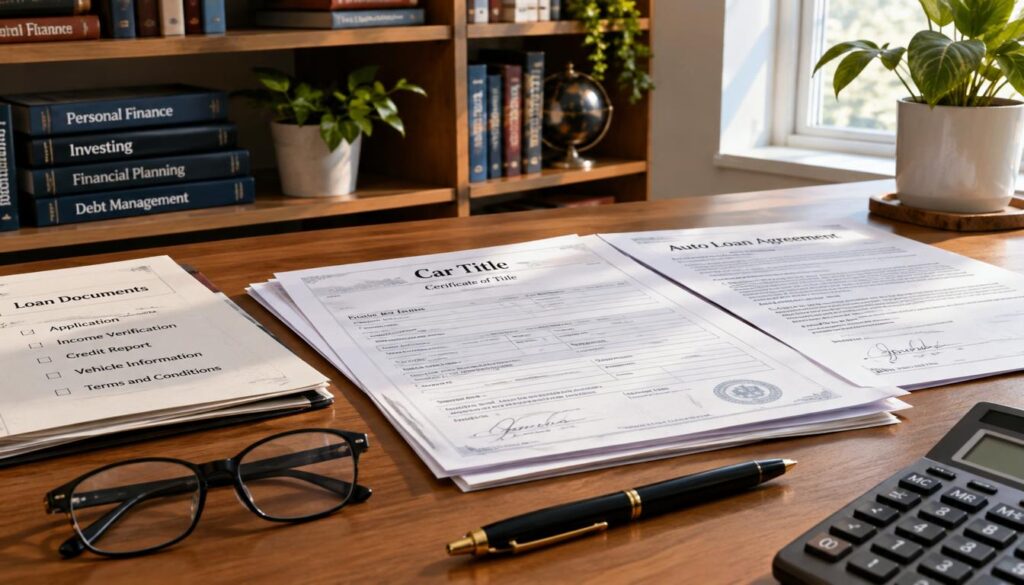
Secured loans put an asset at risk
OneMain Financial allowed borrowers to use a car as collateral for potentially better loan terms in October 2026. That vehicle option is a tradeoff, not a reason to borrow more than the budget allows.
Home equity borrowing also uses an asset as security: the home. Home equity lenders typically allow borrowing against 75%-85% of a property’s value, including any first mortgage.
If the borrower defaults, the lender may take steps to claim the collateral. With a home equity loan, missed payments can put the home itself at risk.
Collateral can also make a loan feel less risky to a lender while making the result more serious for the borrower. We should not pledge a car or home unless the payment fits our budget.
Cosigners and joint borrowers share responsibility
A cosigner agrees to repay if the borrower cannot, but does not share ownership of the loan in the same way as a joint borrower. Joint borrowers apply together and share responsibility for repayment.
Another applicant’s stronger credit or income may help an application. Yet both people accept real financial risk, and a cosigner can be held responsible if the main borrower defaults.
Missed payments can affect both people’s credit reports. A late payment may also strain a close relationship, especially when the second person did not use the borrowed money.
Before applying together, we should discuss who will make each payment and what happens if one person’s income falls. Use a home or car as collateral only if the payment remains affordable and the asset risk is acceptable.
What can you do instead of borrowing?
A borrower who cannot find an affordable offer can still simplify repayment without taking out another high-interest loan. Start with options that lower costs or bring creditors into a clear payment plan.
Non-loan choices can take effort, but they avoid adding a new balance. Small steps may also make a debt load easier to manage while we protect the budget.
Use a balance transfer or credit union alternative
A balance-transfer credit card moves eligible card debt onto one account, often at a promotional rate. It consolidates eligible credit card balances, not medical bills or every kind of debt.
A 0% introductory balance-transfer period commonly lasts 12-21 months, and the card may charge a transfer fee. If the balance remains when the promotional rate ends, the remaining debt may cost more.
The Consumer Financial Protection Bureau explains that transfer fees and expiring promotional rates can change the cost of a credit card balance transfer. We should check the fee and the end date before moving a balance.
Credit unions offer another route for some small cash needs. Federal credit union Payday Alternative Loans can range from $200-$1,000, with terms of one to six months.
Those small-dollar loans are not a way to refinance large balances. A credit union may also help members review their budget and discuss manageable payments.
Get help with a repayment plan
Nonprofit credit counseling can help us review income, bills and debt balances. A counselor may help create a debt management plan with set payments to participating creditors.
We can also make a do-it-yourself budget and payoff strategy. List each balance and APR, keep minimum payments current, then direct extra money toward one debt at a time.
It can help to contact creditors directly and ask whether they can lower a payment, fee or interest rate. A clear budget gives us a more realistic amount to offer each month.
Consider settlement or retirement-plan borrowing cautiously
Debt settlement may reduce the amount repaid, but it can damage credit and bring fees. Creditors do not have to agree, and a settlement is never guaranteed.
A 401(k) loan is usually repaid within five years. Borrowing from retirement can reduce investment growth while the money is out of the account.
Failure to repay under plan rules, or leaving an employer with an outstanding loan, can lead to a taxable distribution and penalties. These risks make settlement and retirement borrowing poor low-risk substitutes for a personal loan.
A debt consolidation credit card can combine eligible card balances, while counseling can help with a broader repayment plan. Ask a nonprofit counselor to review the budget and available payment plans before turning to settlement.
How can you spot guaranteed-approval scams and predatory loans?
No legitimate lender can promise approval before reviewing the borrower’s application, income and credit history. A “guaranteed approval” claim made before that review is a warning sign.
Pause before sharing personal or bank details if a lender uses pressure or asks for money upfront. Watch for these four warning signs:

- Guaranteed approval before reviewing the application, income and credit history.
- An upfront fee request before the loan is funded.
- Pressure to act immediately or loan terms that keep changing.
- Payday-loan costs described as harmless or easy to ignore.
A legitimate origination fee comes out of loan proceeds; it is not paid before funding. A request for advance money can signal fraud, especially when the lender refuses to explain the fee.
A typical $15 fee on a $100, two-week payday loan works out to roughly 391% APR. That cost is far above a 35.99% APR cap and can keep a borrower stuck in repeated loans.
Read the payment schedule and total repayment amount before sharing sensitive information. Walk away from any offer that requires money before the loan is funded.
Conclusion
Bad credit can narrow the options, but it does not make an expensive consolidation loan the only way forward. A loan is worthwhile only when its payment fits the budget and its full repayment cost improves the debt picture.
We can compare soft-pull offers with current debts before agreeing to a hard inquiry. If no loan fits, a non-loan payment plan may be the safer choice.
List each debt’s balance, APR and payment, then compare that total with the complete terms of any offer before applying.